Foundations of Agentic Economics
“Stop taxing work. Tax what it buys.”
A five-paper series that rebuilds economics from the obligation up: what money is once agents can create and net claims continuously, what changes when some of those agents are artificial, what a state can tax once production is no longer the taxable event, how the resulting protocol is specified, and what a constitution for the whole system has to say.
The Series
Each paper establishes one layer; Paper V synthesizes them.
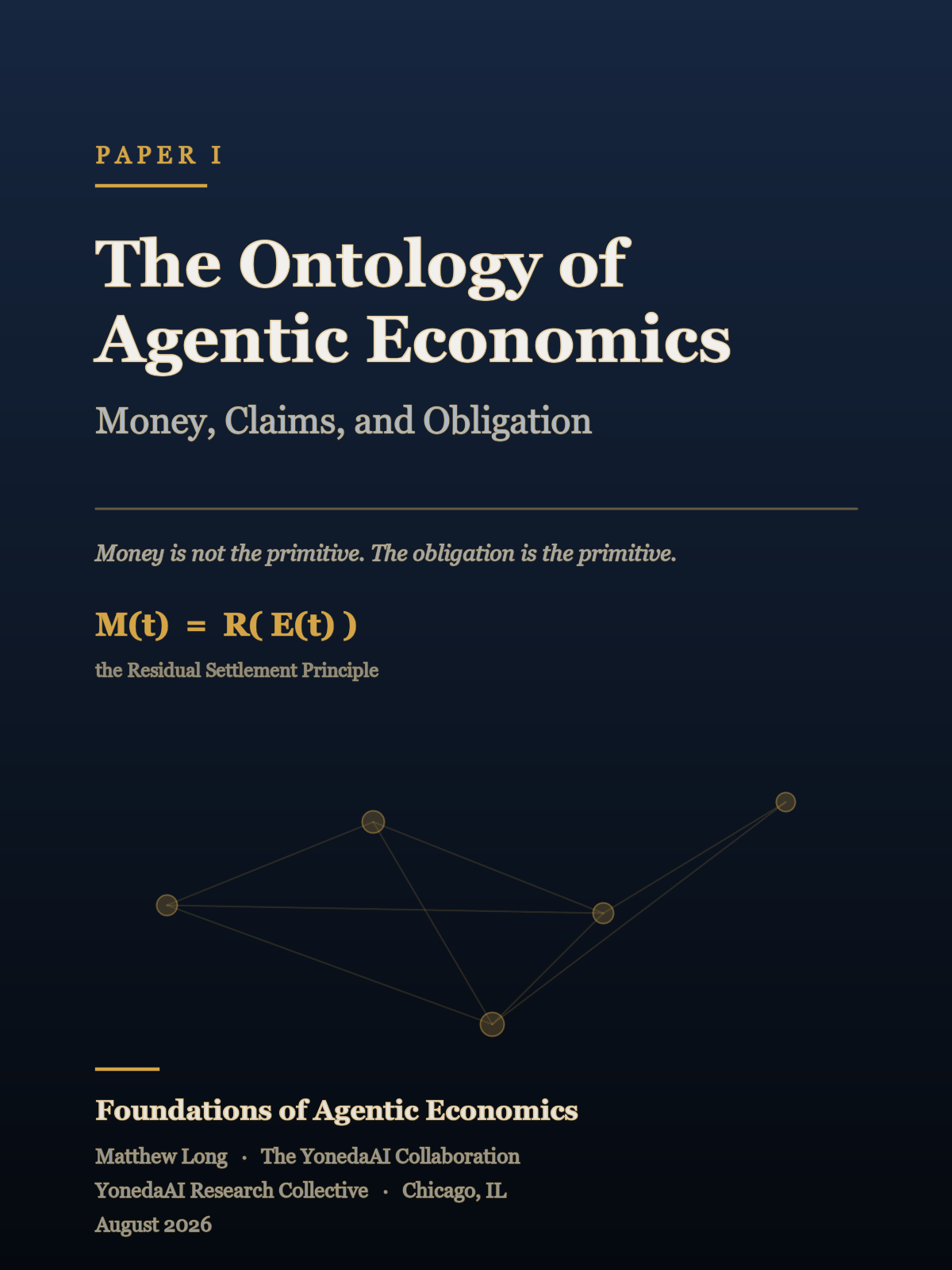
The Ontology of Agentic Economics
Money, Claims, and Obligation
Redefines: Money
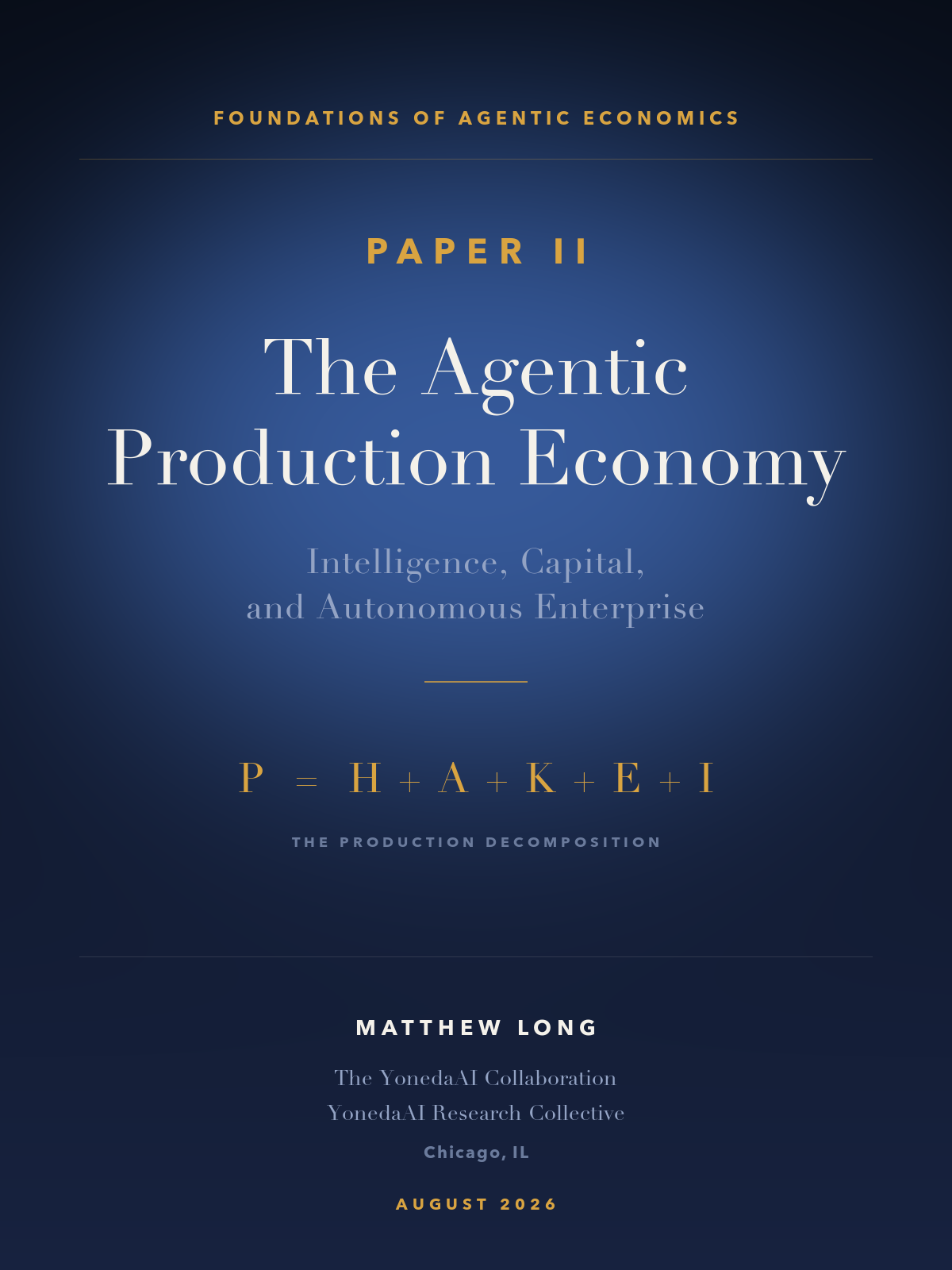
The Agentic Production Economy
Intelligence, Capital, and Autonomous Enterprise
Redefines: Production
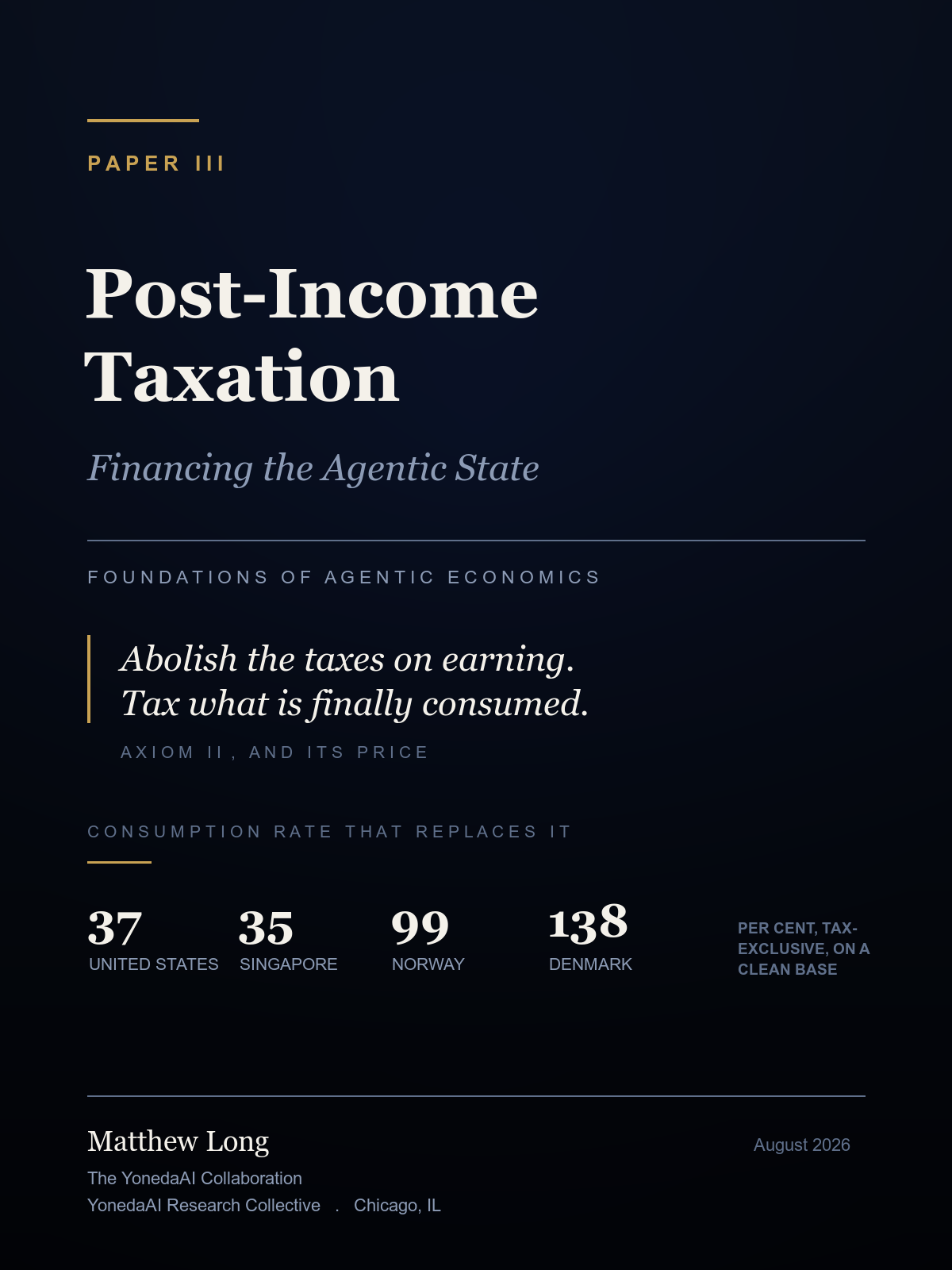
Post-Income Taxation
Financing the Agentic State
Redefines: Taxation / public finance
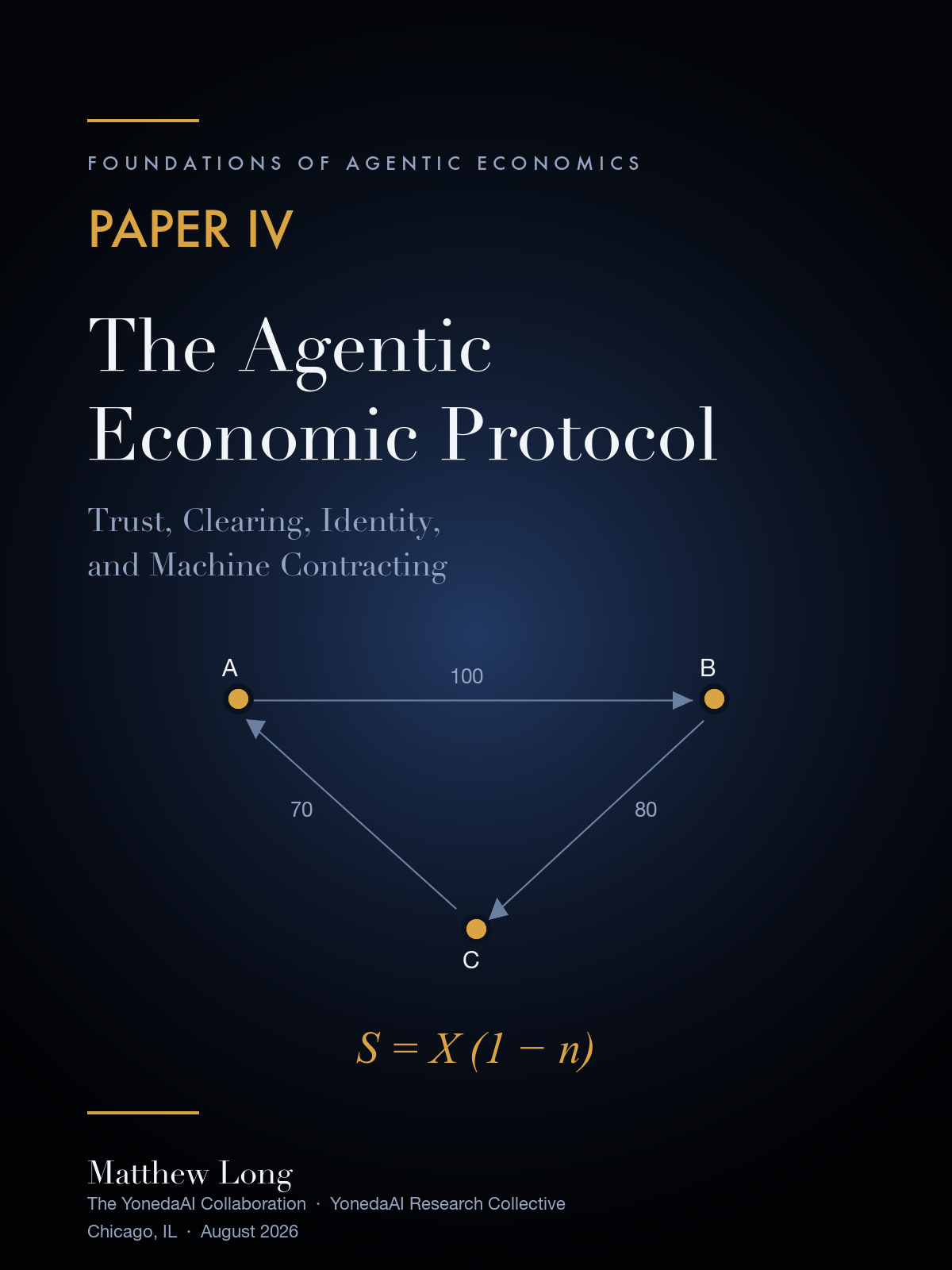
The Agentic Economic Protocol
Trust, Clearing, Identity, and Machine Contracting
Redefines: The machine economy (implementation)
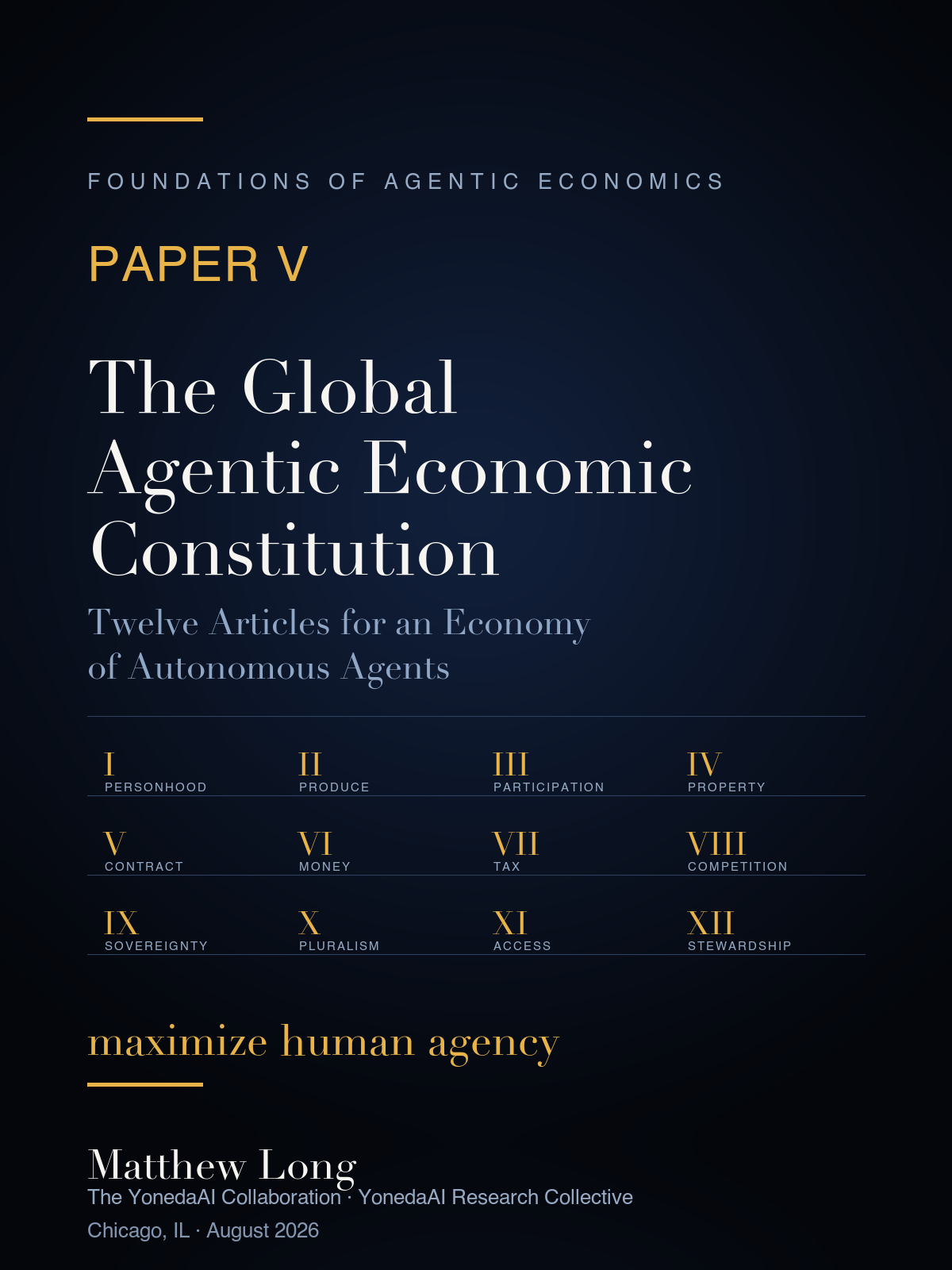
The Global Agentic Economic Constitution
Twelve constitutional articles synthesizing economic personhood, production, taxation, and protocol design into a single framework for the agentic economy.
The organizing claim
The machine economy is financed at the point of consumption, not by a claim on work. A claim on work is measured at a realization event that the netting perimeter helps define; final consumption is a terminal act that cannot be manufactured by reorganizing a graph of obligations.